

AI-powered search isn’t a future speculation — it’s here and reshaping search behaviour today. AI search traffic is growing considerably higher year-over-year, showing how drastically user search patterns are shifting toward generative and AI-driven results. As per the AI SEO Statistics by SemRush, AI summaries answer queries directly on the search surface. So, around 60% of searches now end without a traditional click. These trends signal an unavoidable and important shift in how users interact with search. And why understanding SEO for AI search is crucial for businesses in 2026 and beyond.
In this blog post, we explore what Google’s search experts, Danny Sullivan and John Mueller, are saying about the connection between SEO for AI search and traditional SEO. You’ll learn why the fundamentals haven’t changed, how this impacts your business strategy, and what you should be doing right now to win in both traditional and AI search platforms.
Is SEO for AI Search Distinct From Traditional SEO?
SEO for AI search is not different from traditional SEO. Google’s Danny Sullivan and John Mueller confirm that AI-driven search experiences still rely on the same fundamentals—high-quality content, relevance, authority, and user intent. AI SEO (also called GEO or AI search optimisation) is a subset of SEO, not a replacement.
Danny Sullivan said that AI for SEO, GEO, or whatever you want to call it, should be under SEO, as a subset of SEO.
What Google Really Says About SEO for AI Search
Google’s Danny Sullivan and John Mueller made one thing crystal clear: SEO for AI search isn’t a separate discipline. It’s the same core practice as traditional SEO. While the formats and interfaces may evolve, the foundational principles you’ve relied on still drive success.
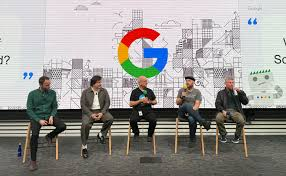
Image credit: Search Engine Roundtable
In the recent Search Off the Record podcast, both Sullivan and Mueller emphasised that the work businesses have been doing for years — optimising content for humans and relevance — remains the right path forward, even with the rapid rise of AI-based search experiences.
Why This Message Should Resonate With Business Owners
Businesses searching for an SEO agency or strategy often feel overloaded by buzzwords like “AI SEO,” “Generative Search,” or “SEO for AI search.” The key takeaway from Google’s leaders is simple: stop chasing the next shiny acronym and focus on what creates real value — high-quality, user-focused SEO.
This focus matters because AI search experiences — from Google’s AI Overviews to ChatGPT-style answers — still pull from the same web content that traditional search engines do. Strong SEO increases your chances of being included in these AI summaries, keeping you visible no matter how search evolves.
Since AI search features are tied closely to algorithm changes, keeping up with Google updates helps businesses adapt their SEO strategies before rankings are impacted.
The Real Difference: Format, Not Fundamentals
Although Sullivan and Mueller stress that SEO for AI search shares the same core principles as traditional SEO, there are shifts you should be aware of — mainly in format and behaviour.
Instead of a list of blue links, users increasingly see synthesized answers right on the search interface. That means your content needs to be structured, authoritative, and easy to interpret — not just for humans but also for AI systems that may present your content directly in responses.
Importantly, this doesn’t mean reinventing your strategy — it means doubling down on quality. Google itself warns that shortcuts might deliver temporary gains but won’t last in the face of smarter AI systems that prioritise authenticity and originality.
How SEO for AI Search Still Relies on Traditional Foundations
If you’re thinking that SEO for AI search demands a totally new blueprint — think again.
1. User-Focused Content Still Wins
Both Sullivan and Mueller urged SEOs to write for real people, not just algorithms. Create deep, original content that answers questions clearly and thoroughly. Google’s focus hasn’t shifted — it’s always been about satisfying user intent
2. Structured Data Isn’t Optional
Given that AI systems like Google’s AI Overviews use structured information to generate summaries, your use of schema markup and logical content hierarchy becomes even more critical. This isn’t new, but it’s more impactful.
3. Authority Trumps Quantity
AI search models pull from a broad set of sources. Sites that demonstrate credibility and authority tend to be cited more frequently in AI summaries. Again, that’s traditional SEO. Focus on backlinks, expert content, and niche authority.
Why Your Business Must Embrace SEO for AI Search Now
Businesses that treat AI search as “a trend” risk falling behind. The data backs this urgency:
- Google AI Overviews now reach 2 billion monthly users — meaning massive potential exposure if you get SEO right.
- Traditional top rankings still influence AI visibility — the higher you rank in standard search, the more likely AI systems will cite you.
AI search isn’t replacing traditional SEO. It is amplifying the need to excel at it. If your search strategy is not strong today, you will struggle to appear prominently in AI-powered environments tomorrow.
Practical Guide to Optimise for AI and Traditional Search
Now that you have learnt that SEO for AI search and traditional SEO fundamentals align, here’s a clear, practical checklist you can follow:
Focus on Search Intent
Map content around real questions your audience asks — not keywords alone. Think solutions, not strings.
Embrace Structured Content
Use headers, bullet points, and a clear taxonomy so AI models can easily parse and present your insights.
Prioritize Originality
Create content that offers unique perspectives, proprietary data, or real user value — something AI can’t simply rehash from other sources.
Improve Engagement Signals
Search engines and AI systems consider engagement metrics like time on page, bounce rate, and scroll depth as quality signals.
Track Traditional + AI Visibility
Use both SEO tools and analytics to monitor how your content performs in blue-link results and AI responses.
These steps amplify your relevance across all search ecosystems — from classic Google results to AI-powered summaries.
Key Takeaways (SEO for AI Search)
- SEO for AI search follows the same principles as traditional SEO
- Google confirms AI SEO is a subset of SEO—not a new discipline
- High-quality, user-focused content increases AI search visibility
- Structured content improves inclusion in AI-generated summaries
- Strong traditional rankings improve AI citation likelihood
- Businesses must double down on SEO fundamentals to stay visible
Conclusion
The core message from industry leaders at Google is reassuring but challenging: your SEO foundation matters more than ever. While AI-driven formats and interfaces surge in popularity, the work you do today, building quality content that meets user needs, remains the path to long-term visibility.
Ready to Boost Your SEO for AI Search and Traditional Search?
Connect with 6S Marketers — a trusted AI SEO agency that blends tried-and-true fundamentals with advanced strategies tailor-made for modern search environments. Whether you want higher visibility in traditional search, AI search, or both, 6S Marketers can help you reach your growth goals.
Don’t wait. Book a consultation with 6S Marketers today and future-proof your AI SEO strategy!
External Reference
Google’s Danny Sullivan & John Mueller On SEO For AI
What is AI, actually, and how is it affecting SEO?
FAQs
1. Is SEO for AI search unique from traditional SEO?
No. According to Google’s Danny Sullivan and John Mueller, the fundamentals remain the same. It is still SEO. AI and generative search experiences are a subset of the larger SEO ecosystem.
2. Will AI search remove the need for SEO?
Never.. SEO will always remain crucial because AI systems still source and cite web content depending on relevance, quality, and user intent.
3. Should businesses prioritise more on AI tools for SEO?
AI tools can help automate tasks and give detailed insights, but they should be used to enhance your SEO strategy, and not replace core SEO work.
4. How do I optimise for AI systems specifically?
Focus on authoritative content, structured data, and engagement signals. Ensure your content clearly answers user questions.
5. Does ranking high in traditional search improve AI visibility?
Yes, traditional rankings still impact whether AI systems will cite your content. High-ranking content gets more opportunities to be surfaced.